


Page 27 - Revista - CICDECH 206 - Rood
P. 27
DESARROLLO SUSTENTABLE  AÑO 34, NÚM. 206 ENE-FEB 2026

                                                                        Junaid, M. F., et al. (2022). Biobased phase change materials from a perspective of recycling,
                                                                        resources conservation and green buildings. Energy and Buildings.
                                                                        Nazir, H., Batool, M., Bolivar Osorio, F. J., Isaza-Ruiz, M., Xu, X., Vignarooban, K., & Kannan, A.
                                                                        M. (2023). Recent developments in phase change materials for energy storage applications:
                                                                        A review. International Journal of Heat and Mass Transfer, 163, 120–135.
                                                                        Rabbat, C., et al. (2022). Sustainability of biomass-based insulation materials in buildings:
                                                                        Current status in France, end-of-life projections and energy recovery potentials. Renewable
                                                                        and Sustainable Energy Reviews.
                                                                        Rashid, F. L., Al-Obaidi, M. A., Dulaimi, A., Mahmood, D. M. N., & Sopian, K. (2023). A review of
                                                                        recent improvements, developments, and effects of using phase-change materials in buil-
                                                                        dings to store thermal energy. Designs.
                                                                        Sharma, A., Tyagi, V. V., Chen, C. R., & Buddhi, D. (2009). Review on thermal energy storage
                                                                        with phase change materials and applications. Renewable and Sustainable Energy Reviews,
                                                                        13(2), 318–345. https://doi.org/10.1016/j.rser.2007.10.005
                                                                        Tenpierik, M. J., et al. (2023). Experimental and numerical investigation of the thermal inertia
                                                                        of sugar-beet-pulp/starch based bricks enhanced with phase change materials. Construc-
                                                                        tion and Building Materials.
                                                                        World Bank. (2021). Urban population (% of total population). World Development Indica-
                                                                        tors. https://data.worldbank.org/indicator/SP.URB.TOTL.IN.ZS
                                                                        World Green Building Council. (2023). Embodied carbon: Buildings are currently responsible
                                                                        for 39% of global energy-related carbon emissions. https://worldgbc.org/climate-action/
                                                                        embodied-carbon/

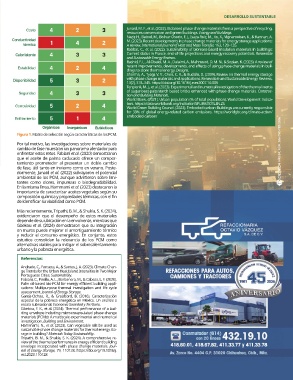
Figura 1. Matriz de selección según características de los PCM.

Por tal motivo, las investigaciones sobre materiales de
cambio de fase muestran un panorama alentador para
enfrentar estos retos. Fabiani et al. (2020) demostraron
que el aceite de palma caducado ofrece un compor-
tamiento prometedor al presentar un doble cambio
de fase, útil tanto en invierno como en verano. Poste-
riormente, Junaid et al. (2022) subrayaron el potencial
ambiental de los PCM, aunque advirtieron sobre limi-
tantes como olores, impurezas o biodegradabilidad.
En la misma línea, Hammami et al. (2023) destacaron la
importancia de caracterizar aceites vegetales según su
composición química y propiedades térmicas, con el fin
de identificar su viabilidad como PCM.

Más recientemente, Tripathi, B. M., & Shukla, S. K. (2024),
evidenciaron que el desempeño de estos materiales
depende de su ubicación en la envolvente, mientras que
Gbekou et al. (2024) demostraron que su integración
en muros puede mejorar el amortiguamiento térmico
y reducir el consumo energético. En conjunto, estos
estudios consolidan la relevancia de los PCM como
alternativas viables para mitigar el sobrecalentamiento
urbano y la pobreza energética.

   Referencias:

   Andrade, C., Fonseca, A., & Santos, J. A. (2023). Climate Chan-
   ge Trends for the Urban Heat Island Intensities in Two Major
   Portuguese Cities. Sustainability.
   Fabiani, C., Pisello, A. L., Barbanera, M., & Cabeza, L. F. (2020).
   Palm oil-based bio-PCM for energy efficient building appli-
   cations: Multipurpose thermal investigation and life cycle
   assessment. Journal of Energy Storage.
   García-Ochoa, R., & Graizbord, B. (2016). Caracterización
   espacial de la pobreza energética en México. Un análisis a
   escala subnacional. Economía Sociedad y Territorio.
   Gbekou, F. K., et al. (2024). Thermal performance of a buil-
   ding envelope including microencapsulated phase change
   materials (PCMs): A multiscale experimental and numerical
   investigation. Building and Environment.
   Hammami, N., et al. (2023). Can vegetable oils be used as
   sustainable phase change materials for thermal energy sto-
   rage in building? Materials Today Sustainability.
   Tripathi, B. M., & Shukla, S. K. (2024). A comprehensive re-
   view of the thermal performance in energy efficient building
   envelope incorporated with phase change materials. Jour-
   nal of Energy Storage, 79, 110128. https://doi.org/10.1016/j.
   est.2023.110128

                                                                        13

